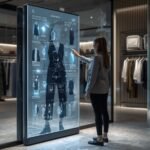
Online fashion shopping has expanded across global markets, yet one challenge remains constant: customers cannot physically try garments before purchase. Size inconsistency, fit uncertainty, and visual mismatch contribute to hesitation and high return rates. Virtual try on technology addresses these issues by allowing shoppers to preview clothing digitally before completing a transaction.
This article explains how virtual try on technology works, its impact on e-commerce performance, its role in reducing returns, and how it is shaping the future of digital fashion retail.
What Is Virtual Try On Technology
Virtual try on technology is a digital system that allows customers to simulate wearing clothing or accessories using a camera, uploaded photo, or 3D avatar. It combines artificial intelligence, computer vision, and augmented reality to map garments onto a user’s body structure.
Unlike static product images, virtual try on provides an interactive visualization experience. Customers can rotate views, change items, and compare styles in real time.
This system reduces the gap between physical retail and online shopping.
Why Virtual Try On Matters In Online Fashion
E-commerce fashion retailers face return rates that exceed other retail categories. One of the main causes is incorrect sizing or unmet expectations.
Virtual try on technology addresses:
- Size mismatch
- Style uncertainty
- Color compatibility
- Proportion imbalance
When customers see how garments appear on their body, they gain confidence in purchase decisions.
Confidence increases conversion rates and reduces cart abandonment.
How Virtual Try On Technology Works
Virtual try on systems follow structured technical processes.
Step 1: Body Detection
Computer vision algorithms detect body landmarks such as shoulders, waist, hips, arms, and legs. These reference points allow the system to create a digital body model.
Step 2: Measurement Estimation
The system estimates size based on user input or visual analysis. Some platforms allow manual measurement entry for improved accuracy.
Step 3: Garment Mapping
Digital versions of clothing are layered onto the body model. This requires 3D garment modeling and scaling logic.
Step 4: Motion Adjustment
Advanced systems adjust garment position when the user moves. Real time tracking enhances realism.
Step 5: Rendering Output
The final simulation is displayed through web browsers or mobile applications.
Machine learning models improve prediction accuracy as more data is processed.
Role Of Artificial Intelligence In Virtual Try On
Artificial intelligence enhances virtual try on performance in multiple ways:
- Body shape classification
- Size recommendation engines
- Fabric behavior simulation
- Personal style suggestions
- Return prediction analysis
AI identifies patterns in purchasing behavior and adjusts recommendations accordingly.
The more a user interacts with the system, the more accurate predictions become.
Impact On Customer Decision Making
Virtual try on influences purchasing psychology.
When shoppers view clothing on their digital model, they:
- Visualize ownership
- Reduce uncertainty
- Compare alternatives
- Evaluate combinations
Visualization reduces hesitation.
This behavioral shift contributes to higher checkout completion rates.
Reducing Product Returns
Fashion retailers process large volumes of returns due to incorrect fit or dissatisfaction.
Virtual try on technology reduces return rates by:
- Improving size accuracy
- Managing expectations
- Aligning appearance with customer perception
Lower return rates reduce logistics costs and environmental impact.
Integration With E-Commerce Platforms
Retailers integrate virtual try on into product pages. Customers activate camera features without leaving the site.
Integration supports:
- Seamless checkout
- Personalized product recommendations
- Cross category pairing
- Dynamic inventory updates
The shorter the purchase path, the higher the conversion probability.
Mobile Commerce And Virtual Try On
Mobile shopping continues to dominate digital retail. Virtual try on systems optimized for smartphones allow users to activate camera features instantly.
Mobile compatibility is essential because:
- Consumers browse on mobile devices
- Social media links drive traffic
- Impulse purchases occur through apps
Mobile integration increases accessibility.
Virtual Try On For Accessories And Footwear
Beyond clothing, virtual try on applies to:
- Eyewear
- Jewelry
- Shoes
- Hats
- Bags
Facial mapping technology supports accurate placement for accessories.
Footwear systems analyze foot structure for size prediction.
Data Privacy And Security
Virtual try on systems process images and measurement data.
Retailers must implement:
- Secure storage protocols
- Data encryption
- Clear consent mechanisms
- Deletion options
Consumer trust influences adoption rates.
Compliance with data protection regulations is mandatory.
Operational Benefits For Retailers
Virtual try on supports operational efficiency by:
- Lowering return processing costs
- Improving inventory planning
- Increasing customer retention
- Enhancing marketing targeting
Data collected during interactions supports trend forecasting.
Retailers can identify popular styles based on digital fitting activity.
Technology Infrastructure Requirements
To operate effectively, virtual try on systems require:
- Cloud computing capacity
- Real time rendering engines
- Large product image databases
- High quality garment digitization
- Fast internet connections
Investment in infrastructure determines performance quality.
Challenges In Virtual Try On Implementation
Despite adoption growth, challenges exist:
- Inconsistent garment sizing across brands
- Image lighting variation
- High development costs
- Device compatibility limitations
- Latency issues
Continuous research improves technical accuracy.
Consumer Adoption Trends
Consumers increasingly expect interactive shopping features.
Adoption drivers include:
- Growth of online shopping
- Familiarity with mobile apps
- Demand for personalization
- Reduced in store shopping frequency
Retailers that fail to adopt interactive tools risk losing competitive advantage.
Future Of Virtual Try On In Fashion
Virtual try on technology continues evolving.
Future developments may include:
- Full body 3D scanning through smartphones
- Real time fabric simulation
- AI driven outfit assembly
- Integration with smart mirrors
- Personalized garment manufacturing
As computational power improves, simulation realism increases.
SEO Strategy For Virtual Try On Content
To improve search visibility, target keywords include:
- Virtual try on technology
- Online fashion shopping tools
- AI fashion fitting
- Digital fitting room
- Augmented reality fashion
Keyword placement in headings and structured sections improves indexing.
Internal linking to related content enhances ranking performance.
Conclusion
Virtual try on technology is changing online fashion shopping by reducing uncertainty, improving size accuracy, and increasing customer confidence. Through artificial intelligence and computer vision, shoppers can preview garments digitally before purchasing.
Retailers benefit from higher conversion rates and lower return costs. As digital infrastructure advances, virtual try on will become a standard feature across fashion platforms.
Interactive visualization represents a major shift in how consumers experience fashion in digital environments.