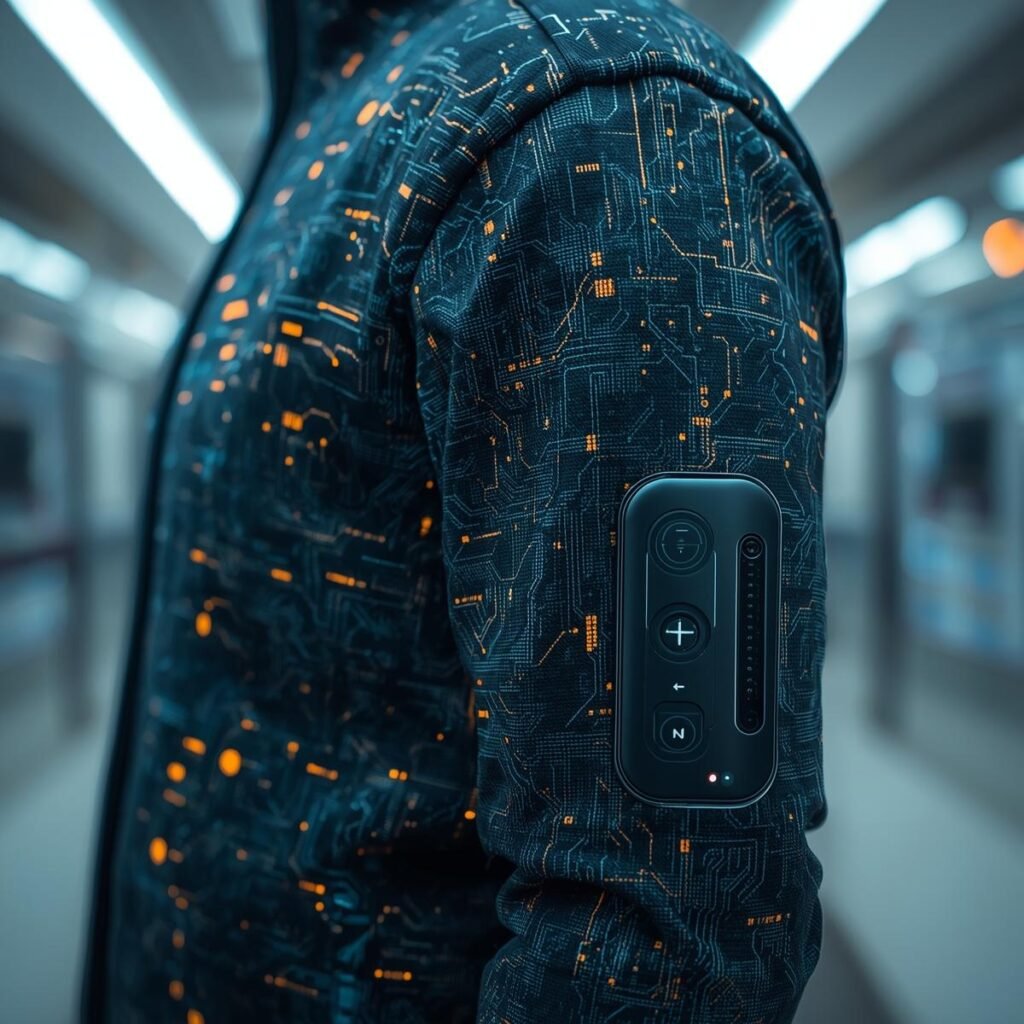

Technology continues to influence fashion manufacturing, textile development, and consumer expectations. Smart fabrics and tech integrated clothing represent a shift in how garments function. Clothing is no longer limited to covering the body. It now supports health tracking, environmental sensing, connectivity, and performance monitoring.
This article explains how smart fabrics work, the technologies behind tech integrated clothing, industry applications, manufacturing processes, and future developments shaping wearable innovation.
What Are Smart Fabrics
Smart fabrics are textiles engineered with embedded technology that allows them to sense, react, or adapt to environmental conditions or user input. These fabrics combine traditional textile production with electronics, sensors, and conductive materials.
Smart fabrics fall into three categories:
- Passive smart textiles – detect environmental changes
- Active smart textiles – detect and react
- Ultra smart textiles – detect, react, and adapt autonomously
These categories reflect increasing levels of integration and response capability.
Core Technologies Behind Smart Fabrics
Smart fabrics rely on multiple technologies working together.
Conductive Fibers
Conductive fibers allow electrical signals to pass through fabric. These fibers are woven into textiles to create circuits within clothing.
Materials used include:
- Silver coated threads
- Copper fibers
- Carbon based materials
Conductive pathways enable sensors and microprocessors to communicate.
Embedded Sensors
Sensors integrated into garments monitor:
- Body temperature
- Heart rate
- Movement patterns
- Muscle activity
- Hydration levels
These sensors collect data and transmit it to connected devices.
Microcontrollers and Processors
Small processors embedded within clothing analyze sensor data. Some garments include removable modules for charging and software updates.
These processors convert raw data into usable metrics.
Wireless Connectivity
Tech integrated clothing often includes:
- Bluetooth modules
- Wi-Fi connectivity
- Near field communication
Wireless transmission sends data to smartphones or cloud platforms.
Applications of Smart Fabrics
Smart textiles serve multiple industries.
Health Monitoring
Wearable garments track biometric data in real time. Applications include:
- Heart rate monitoring
- Sleep tracking
- Posture correction
- Respiratory monitoring
Medical professionals may use data for remote patient monitoring.
Sports and Fitness
Athletic wear integrates performance tracking.
Data points include:
- Speed
- Stride length
- Muscle engagement
- Recovery patterns
Athletes use insights to adjust training programs.
Workplace Safety
Industrial garments detect:
- Toxic gas exposure
- Temperature extremes
- Impact events
- Fatigue indicators
These features enhance worker safety.
Military and Defense
Defense applications include:
- Communication integration
- Environmental sensing
- Biometric monitoring
- Location tracking
Tech integrated uniforms support operational coordination.
Fashion and Consumer Wear
Smart clothing in fashion includes:
- Temperature regulating jackets
- LED integrated garments
- Gesture controlled apparel
- Connected footwear
Consumers gain functionality without carrying additional devices.
Temperature Regulation Technology
Some smart fabrics adapt to temperature changes.
Mechanisms include:
- Phase change materials that absorb or release heat
- Moisture management layers
- Ventilation systems triggered by body heat
This supports thermal balance.
Energy Harvesting Textiles
Energy harvesting fabrics generate power from movement or solar exposure.
Methods include:
- Piezoelectric fibers
- Solar panel integration
- Kinetic energy conversion
These systems power small electronic components within clothing.
Manufacturing Process of Smart Fabrics
Production combines textile engineering and electronics assembly.
Steps include:
- Fiber preparation
- Weaving conductive threads
- Sensor placement
- Circuit integration
- Protective layering
- Software programming
Manufacturers must ensure washability and durability.
Challenges in Smart Fabric Development
Despite growth, challenges remain:
- Battery limitations
- Washing durability
- Data privacy concerns
- High production costs
- Recycling complexity
Innovation continues to address these issues.
Data Security in Tech Integrated Clothing
Since garments collect personal data, privacy is critical.
Manufacturers must implement:
- Data encryption
- Secure cloud storage
- User consent systems
- Firmware updates
Consumer trust depends on security standards.
Sustainability Considerations
Smart clothing introduces environmental questions.
Concerns include:
- Electronic waste
- Material separation difficulty
- Resource intensive production
Some companies focus on modular components to improve recyclability.
Integration with Artificial Intelligence
AI enhances smart clothing by analyzing collected data.
Applications include:
- Health anomaly detection
- Performance optimization
- Behavioral pattern recognition
Machine learning improves insights over time.
Market Growth and Industry Investment
The wearable technology market continues expanding due to:
- Increased health awareness
- Growth of connected devices
- Remote health monitoring demand
- Innovation in textile science
Investment in research accelerates development.
Smart Fabrics in Healthcare
Medical garments support:
- Chronic disease monitoring
- Post-surgery tracking
- Rehabilitation support
- Elderly care monitoring
Continuous data collection reduces hospital visits.
Tech Integrated Clothing in Retail
Retailers introduce connected garments through:
- Limited edition releases
- Sports partnerships
- Technology brand collaborations
Consumer adoption depends on usability and cost.
Regulatory Considerations
Smart clothing used in healthcare may require regulatory approval.
Compliance areas include:
- Medical device regulations
- Data protection laws
- Safety certifications
Regulation influences commercialization timelines.
Future Trends in Smart Fabrics
Upcoming developments may include:
- Self cleaning textiles
- Biometric authentication clothing
- Integrated display surfaces
- Emotion responsive fabrics
- Real time environmental alerts
Research focuses on lighter components and flexible circuits.
Role of Nanotechnology
Nanotechnology improves:
- Conductivity
- Water resistance
- Durability
- Sensor sensitivity
Nano scale materials increase performance without adding weight.
Consumer Adoption Factors
Adoption depends on:
- Price accessibility
- Ease of use
- Comfort
- Data privacy assurance
- Battery life
Manufacturers must balance function and practicality.
Economic Impact of Smart Textiles
Smart fabric innovation influences:
- Textile manufacturing jobs
- Electronics integration sectors
- Retail distribution models
- Supply chain management
New skills are required in production facilities.
Smart Clothing and Internet of Things
Smart garments function as IoT devices.
They connect to:
- Smartphones
- Smart home systems
- Health platforms
- Fitness dashboards
IoT integration expands ecosystem connectivity.
Competitive Landscape
Companies compete through:
- Sensor accuracy
- Battery efficiency
- Platform integration
- Software analytics
- Design integration
Continuous innovation shapes market leadership.
Conclusion
Smart fabrics and tech integrated clothing represent the intersection of textile engineering and digital technology. These garments collect data, respond to environmental changes, and integrate with connected systems.
Applications span healthcare, sports, workplace safety, defense, and consumer fashion. While challenges exist in durability, battery life, and data security, ongoing research continues to improve performance and accessibility.
As technology advances, clothing will increasingly serve as an interactive interface between individuals and digital systems. Smart fabrics are redefining how garments function within daily life.