
The fashion industry has shifted from store-based retail to digital platforms. As online competition increases, brands search for ways to create engagement, increase trust, and improve purchase decisions. Augmented reality plays a central role in this transformation.
Augmented reality in fashion connects digital elements with the physical world through smartphones, tablets, and wearable devices. It allows customers to interact with products in real time before making a purchase decision.
This article explains how augmented reality improves customer experience in fashion, increases engagement, reduces returns, and supports long-term brand growth.
What Is Augmented Reality In Fashion
Augmented reality overlays digital content onto real-world environments. In fashion retail, this includes:
- Virtual clothing previews
- Digital accessories placement
- Interactive product visualization
- 3D garment inspection
- Virtual fitting rooms
Unlike virtual reality, augmented reality does not require headsets. It operates through standard mobile devices.
This accessibility supports mass adoption.
Why Customer Experience Matters In Fashion
Customer experience determines whether shoppers return to a brand. Online fashion retail removes physical interaction, making trust more difficult to build.
Customers often hesitate because they cannot:
- Feel fabric texture
- Test garment fit
- Examine details
- Compare proportions
Augmented reality fills this experience gap.
When users interact with digital overlays, they gain product clarity.
Clarity improves purchase confidence.
Real Time Product Visualization
Augmented reality allows customers to view clothing and accessories on their body or within their surroundings.
For example:
- A user points a phone camera at themselves
- A digital garment appears over their image
- Movement updates garment alignment
This real time visualization reduces guesswork.
Customers understand how items align with body structure.
Increased Engagement Through Interaction
Traditional product pages rely on static images. Augmented reality creates interaction.
Interactive features include:
- Rotating garments in 360 degrees
- Zooming into stitching details
- Changing colors instantly
- Viewing outfits under different lighting conditions
Interaction increases time spent on product pages.
Longer engagement supports higher conversion rates.
Personalization Through Data Analysis
Augmented reality systems integrate with artificial intelligence engines. These systems analyze:
- Body measurements
- Style preferences
- Purchase history
- Browsing behavior
Based on data patterns, customers receive tailored recommendations.
Personalized experiences increase relevance.
Relevance increases satisfaction.
Reducing Product Returns
Fashion e-commerce faces high return rates due to sizing issues.
Augmented reality reduces returns by:
- Improving size visualization
- Matching items to body shape
- Clarifying product proportions
- Managing expectations before checkout
Lower return rates reduce shipping costs and operational losses.
Brands benefit from improved profit margins.
Building Trust In Online Fashion Retail
Trust is a central factor in purchase decisions.
Augmented reality supports trust by:
- Providing transparent product visualization
- Offering accurate digital representation
- Reducing uncertainty
- Supporting informed decisions
When customers feel informed, they complete purchases with less hesitation.
Trust also increases repeat purchases.
Integration With Mobile Shopping
Mobile devices drive a large percentage of fashion traffic.
Augmented reality improves mobile experience by:
- Activating camera-based previews
- Offering instant try on features
- Integrating social sharing
- Supporting quick checkout
Mobile-first optimization ensures seamless performance.
Retailers that prioritize mobile augmented reality capture higher engagement levels.
Social Media And Augmented Reality Filters
Social media platforms integrate augmented reality filters for fashion brands.
Users can:
- Try accessories through camera filters
- Share looks with followers
- Tag products directly
- Access purchase links
This strategy connects entertainment with commerce.
Social sharing expands brand reach organically.
In Store Augmented Reality Experiences
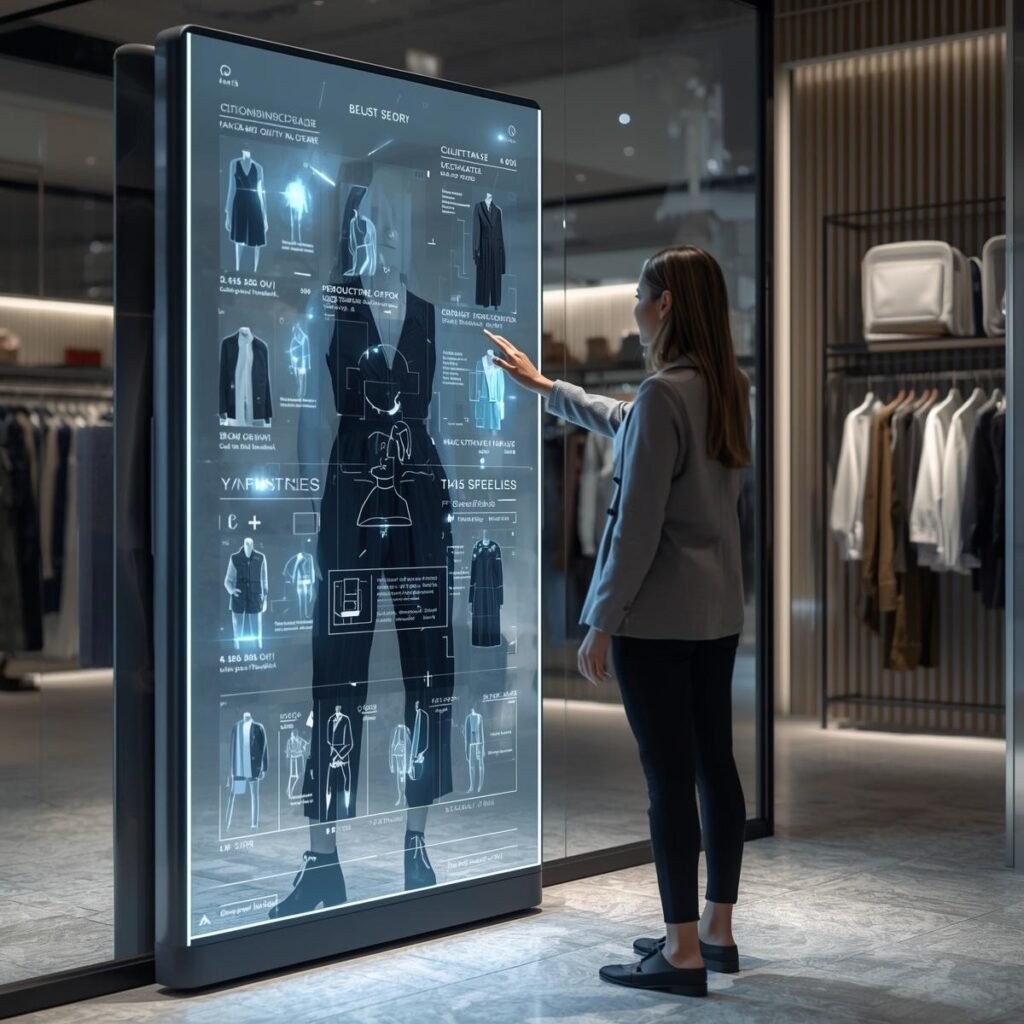
Augmented reality is not limited to online platforms. Physical stores use interactive mirrors and digital kiosks.
In-store applications include:
- Virtual outfit combination
- Inventory lookup
- Style suggestion display
- Size availability confirmation
This hybrid model connects digital tools with physical retail.
Customers receive consistent experiences across channels.
Role Of Artificial Intelligence In Augmented Reality
Artificial intelligence strengthens augmented reality performance by:
- Tracking body movement
- Improving garment alignment
- Predicting size accuracy
- Recommending complementary items
Machine learning improves system precision over time.
As customer data increases, prediction accuracy improves.
Environmental Impact And Sustainability
High return rates contribute to carbon emissions and textile waste.
Augmented reality supports sustainability by:
- Reducing unnecessary shipping
- Lowering return processing
- Decreasing overproduction
- Supporting demand forecasting
Data-driven inventory planning reduces waste in supply chains.
Technical Infrastructure Behind Augmented Reality
Augmented reality in fashion requires:
- Computer vision technology
- 3D garment modeling
- Cloud rendering systems
- Motion tracking algorithms
- High speed network support
Retailers invest in scalable cloud infrastructure to maintain performance during high traffic periods.
System stability influences user satisfaction.
Challenges In Augmented Reality Adoption
Despite growth, some challenges remain:
- Device compatibility variation
- Lighting inconsistency
- Inaccurate body mapping
- High development cost
- User privacy concerns
Ongoing research addresses these limitations.
Improved algorithms increase reliability.
Customer Behavior Changes
Augmented reality influences shopping behavior by:
- Encouraging experimentation
- Increasing product comparison
- Supporting impulse purchases
- Strengthening emotional connection
When users see themselves wearing products, purchase intent increases.
Visual confirmation drives action.
Competitive Advantage For Fashion Brands
Brands using augmented reality differentiate themselves.
Benefits include:
- Higher engagement rates
- Increased brand recall
- Improved retention
- Stronger customer loyalty
Interactive shopping experiences become a market standard.
Brands that delay adoption risk losing digital share.
Future Of Augmented Reality In Fashion
Emerging developments may include:
- Real time fabric simulation
- Voice activated style changes
- Integration with wearable devices
- Personalized virtual showrooms
- On-demand digital garment production
As computing power expands, augmented reality experiences will become more precise and responsive.
SEO Strategy For Augmented Reality Content
To increase search engine visibility, use structured keywords such as:
- Augmented reality in fashion
- AR fashion shopping
- Online clothing visualization
- Digital fitting room technology
- AI fashion experience
Use internal linking to related content on virtual try on technology and AI recommendations.
Structured headings improve search indexing.
Long form content supports keyword authority.
Conclusion
Augmented reality improves customer experience in fashion by providing interactive product visualization, reducing purchase uncertainty, and supporting personalized shopping journeys.
Through integration with artificial intelligence and mobile platforms, augmented reality bridges the gap between digital and physical retail environments.
Retailers benefit from increased engagement, reduced returns, and stronger customer trust. As adoption grows, augmented reality will remain a central tool in fashion e-commerce development.